
Comparison is a Killer
I fail miserably at keeping the blinders on.
I would like to say that I’m always inspired by other artists and I don’t compare.
Unfortunately, I do.
Not in the sense of envy but in measuring my craft to others. You see, I view art as a continuous practice - a lifetime commitment to refining your chosen medium. I am old school artist who is inspired by those dedicated to their technique.
What cripples me in my own practice is my brushwork. Is it developed enough to convey the form, proportions, values in the lightest brushstrokes with emotion and meaning? I’m always in awe of those who simultaneously capture form and convey emotion with a couple of brushstrokes, even more so if it’s the human anatomy.
For those who I lost after the word brushwork, let me explain.
As an artist your brushwork is your signature or handwriting. Once you’ve mastered the pressure, angle, speed and paint load of the brush, so you start to convey emotion and meaning through each stroke. Your brushwork is unique to you and should be distinguishable from other artists - it’s basically your intellectual property.
So why do I compare if it’s about cultivating your own style?
I’m not sure.
Perhaps it’s the inner perfectionist or Virgo who sees the disproportions or overpainted sections that masks my initial errors.
Perhaps it's my Asian upbringing, where parents leverage comparison as a tool to make you compete and achieve more.
Perhaps one day I will find peace in cultivating my own unique style.
The Pain of the Human Anatomy
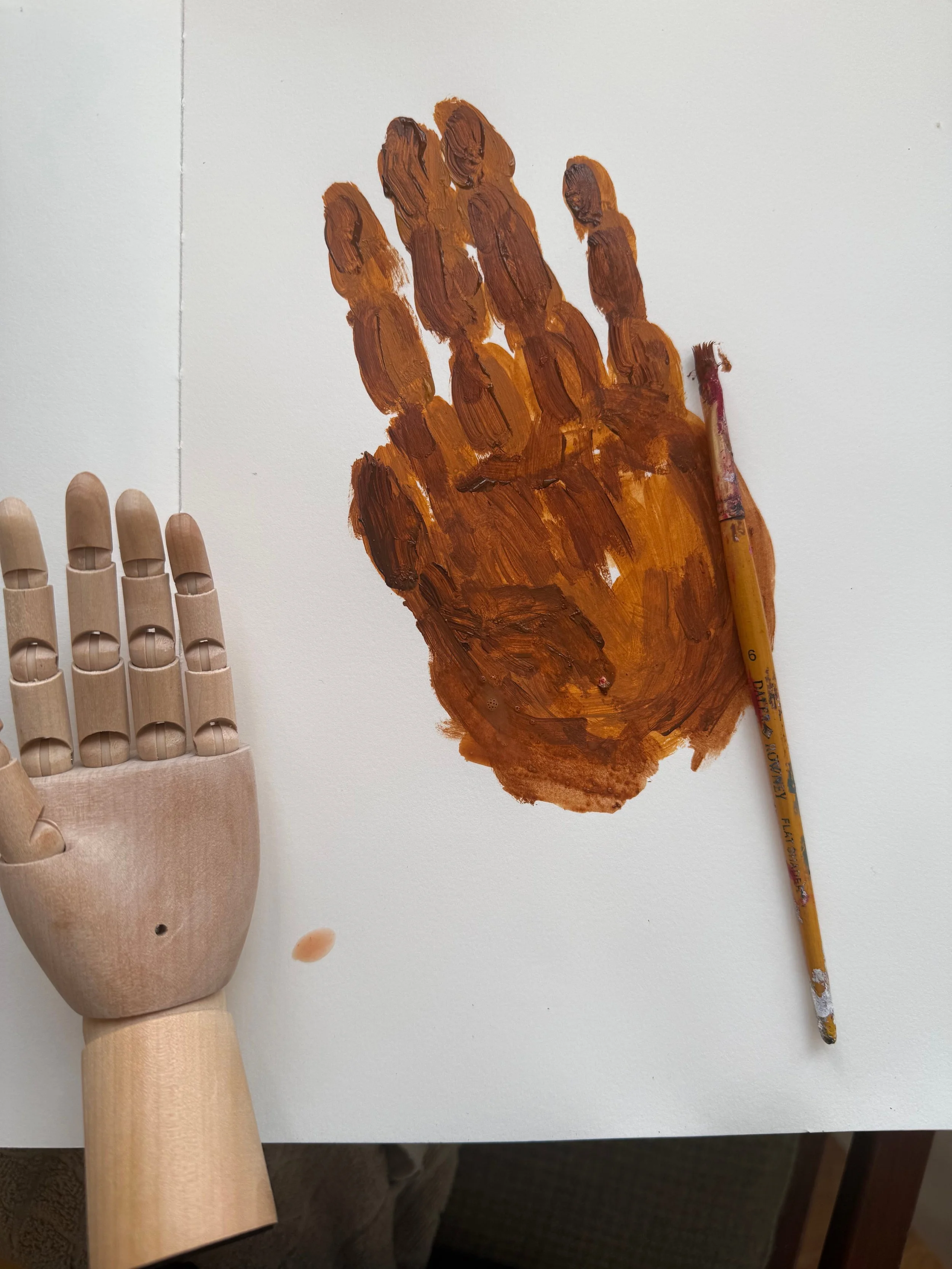
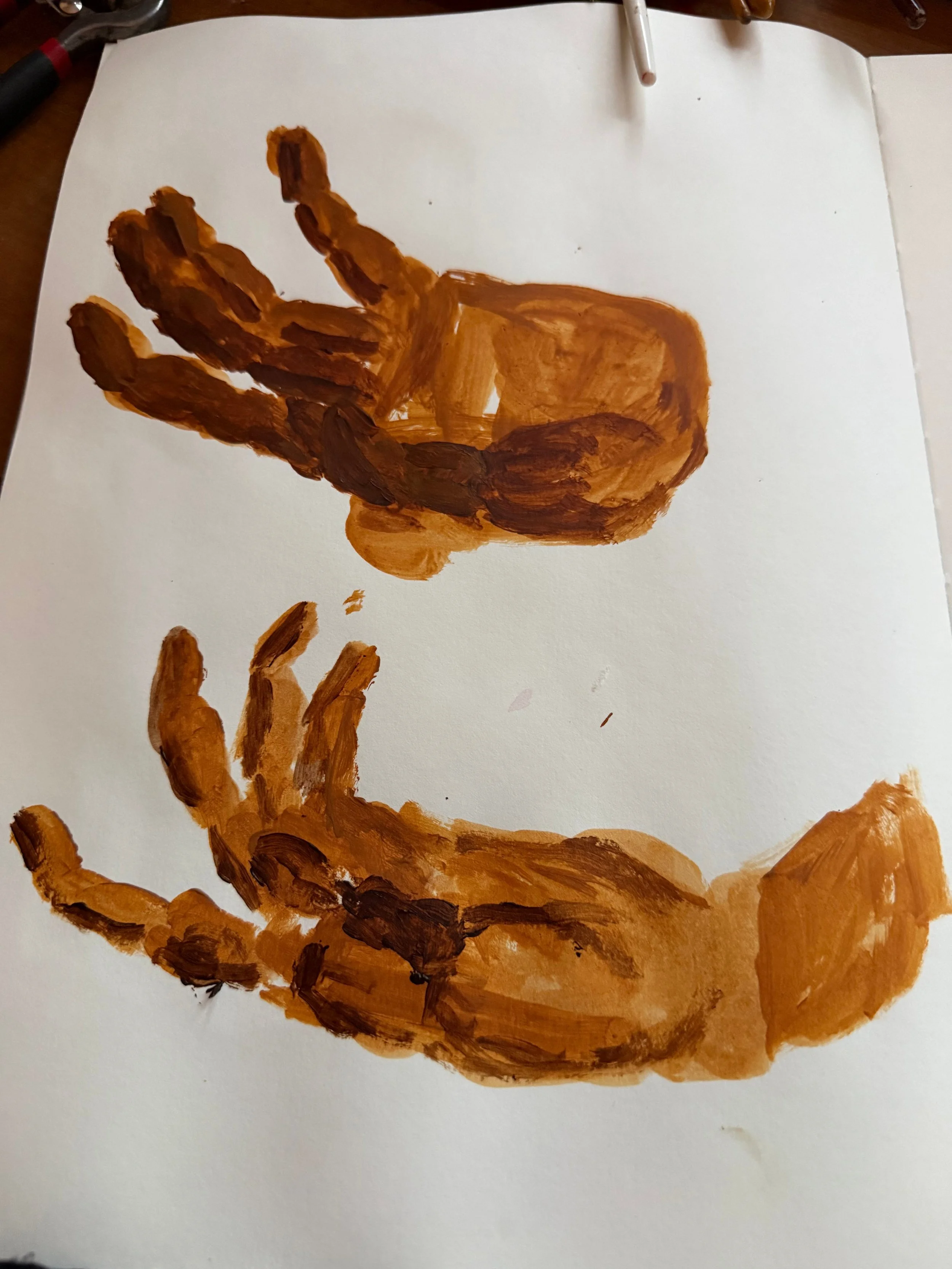
So I set the challenge of painting hands for this year’s theme and collection.
Most artists, including myself veer to their strengths. My strength is capturing perspective, whether it’s landscapes or cityscapes I can easily create scenes for viewers to step inside.
However, the human anatomy is another story.
My reluctancy and pain stems from a life drawing class in art school. I vividly remember the teacher peeking over my shoulder and exclaiming loudly, ‘the head is too big’. I was mortified. And burnt brightly red with embarrassment while comparing my disproportioned figure to my peers’ ‘perfect’ proportioned drawings. From then on, I lost all interest in painting the human anatomy.
The incident cut deep.
In a way, the hands theme is to heal the scars of inadequacy and rewrite the internal narrative of ‘I can’t’ to ‘I can with daily practice and patience’. After all Rome wasn’t built in a day. I know from being a life-long yogi that most yoga postures can be mastered with daily practice, patience and most importantly kindness to oneself.
So while I continue to struggle with the inner voices of inadequacy, I am ending this week’s post on a positive note. I’m leaning into the ‘painful’ human anatomy by applying the same yogi principles to my art, while attempting to keep my blinders on.